
News
What's new in White Valhalla Wolves?
24.02.2026 / Everyday matters
Grimnir's visit (video)
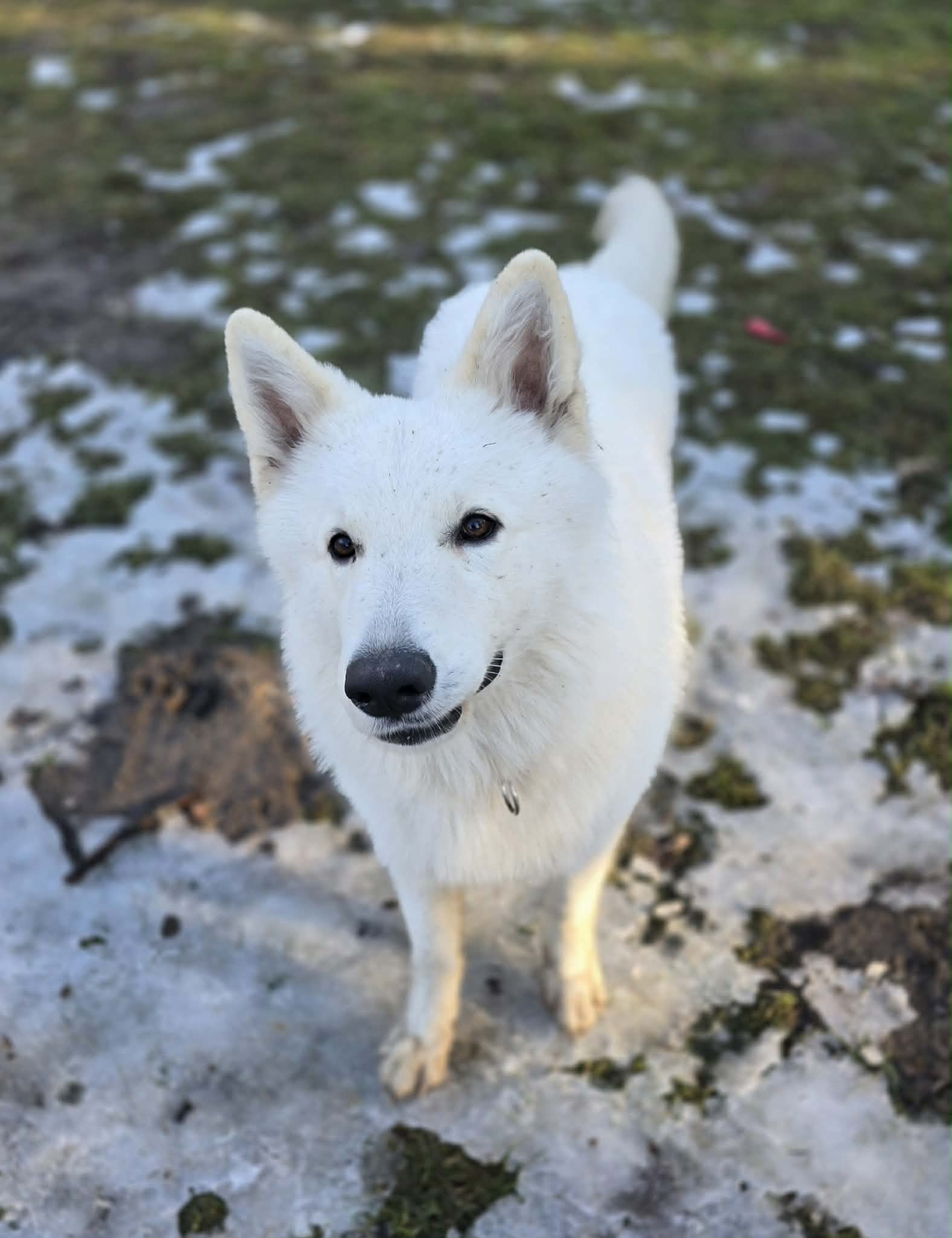
Grimnir, from litter G, sired by Walkiria and Fenris 2024, visited us for a few days.
Upon our first meeting, I had doubts about whether I should let him into the pack. In his interactions with Walkiria and Celebrian, I saw a dog who was unyielding and clearly lacking in canine manners.
After some thought, however, I decided that this was precisely why he should be included in the pack structure. Only in a real relationship with adult, stable dogs can he learn boundaries, communication, and reading signals. This environment quickly validates a young male's ambitions.
I trusted my pack, and especially Fenris, to guide him through this process calmly and without unnecessary escalation. I was not disappointed.
22.02.2026 / Guides
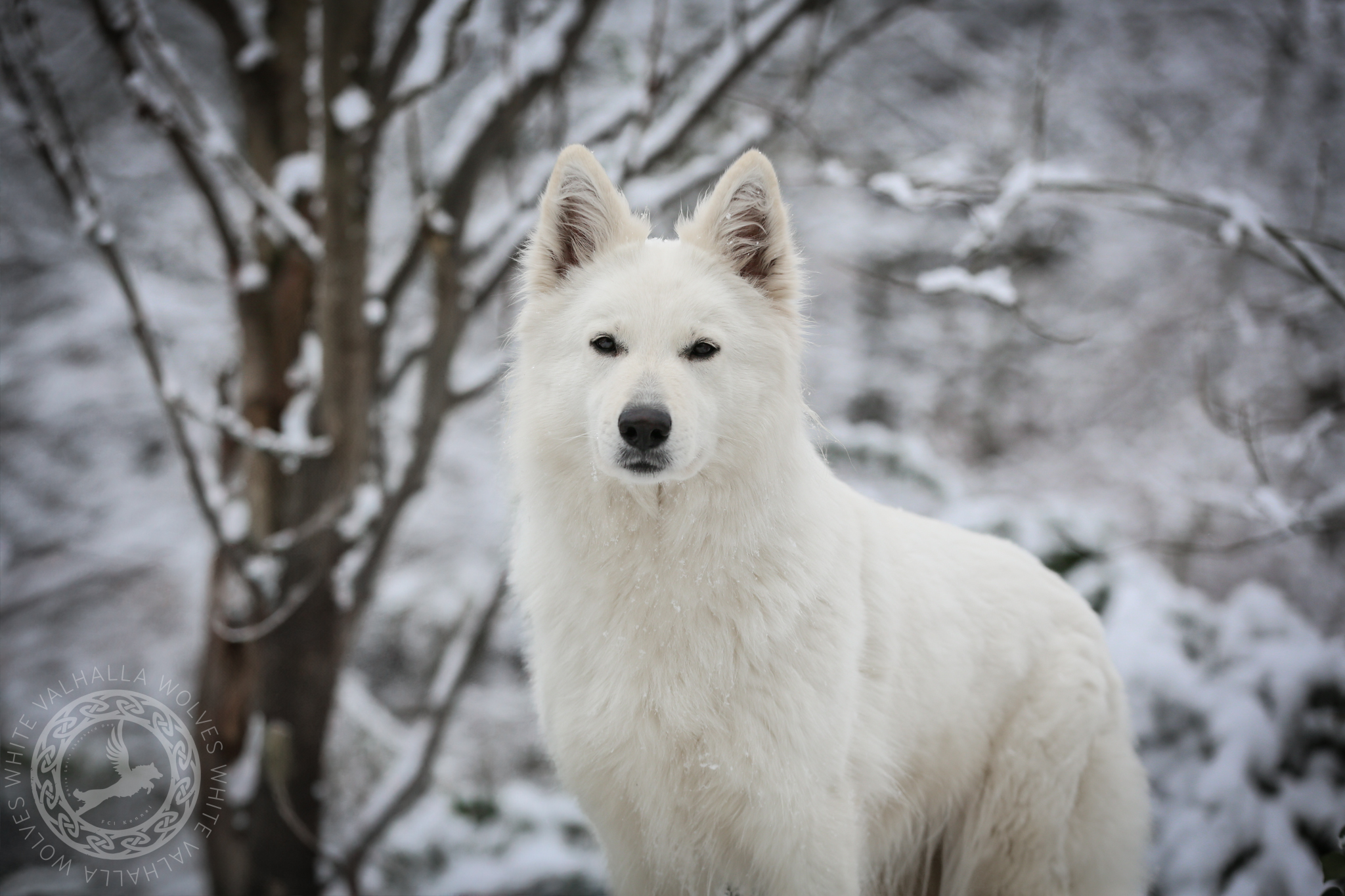
Did you know that White Swiss Shepherd is not actually "white"?
Did you know that the White Swiss Shepherd is not "white" at all?
...(in the genetic sense)
I'm returning to the topic I touched on in the previous post – when I wrote that our dogs aren't pure white. And it's not about aesthetics, but about genetics.
The breed's coat color is based on the ee transcription at the E locus – the so-called recessive red.
It is this transcription that determines the coat color.
What does ee mean?
The MC1R receptor in the hair follicle does not activate the production of eumelanin (black/brown pigment). As a result, only pheomelanin – a yellow-red pigment – is present in the coat.
At the same time, the breed maintains a black, unlightened skin pigmentation. Hence, the typical population record is described as BB DD ee, where:
• B - indicates black eumelanin (not brown)
• D - lack of the gene that lightens black pigment
• ee - inhibits eumelanin production in the coat (recessive red)
Therefore, in the White Swiss Shepherd breed:
- the nose remains black,
- the eye rims are black,
- the pads are dark,
- and the coat itself is very light pheomelanin. (...)
20.02.2026 / Everyday matters
Arctic wolves?
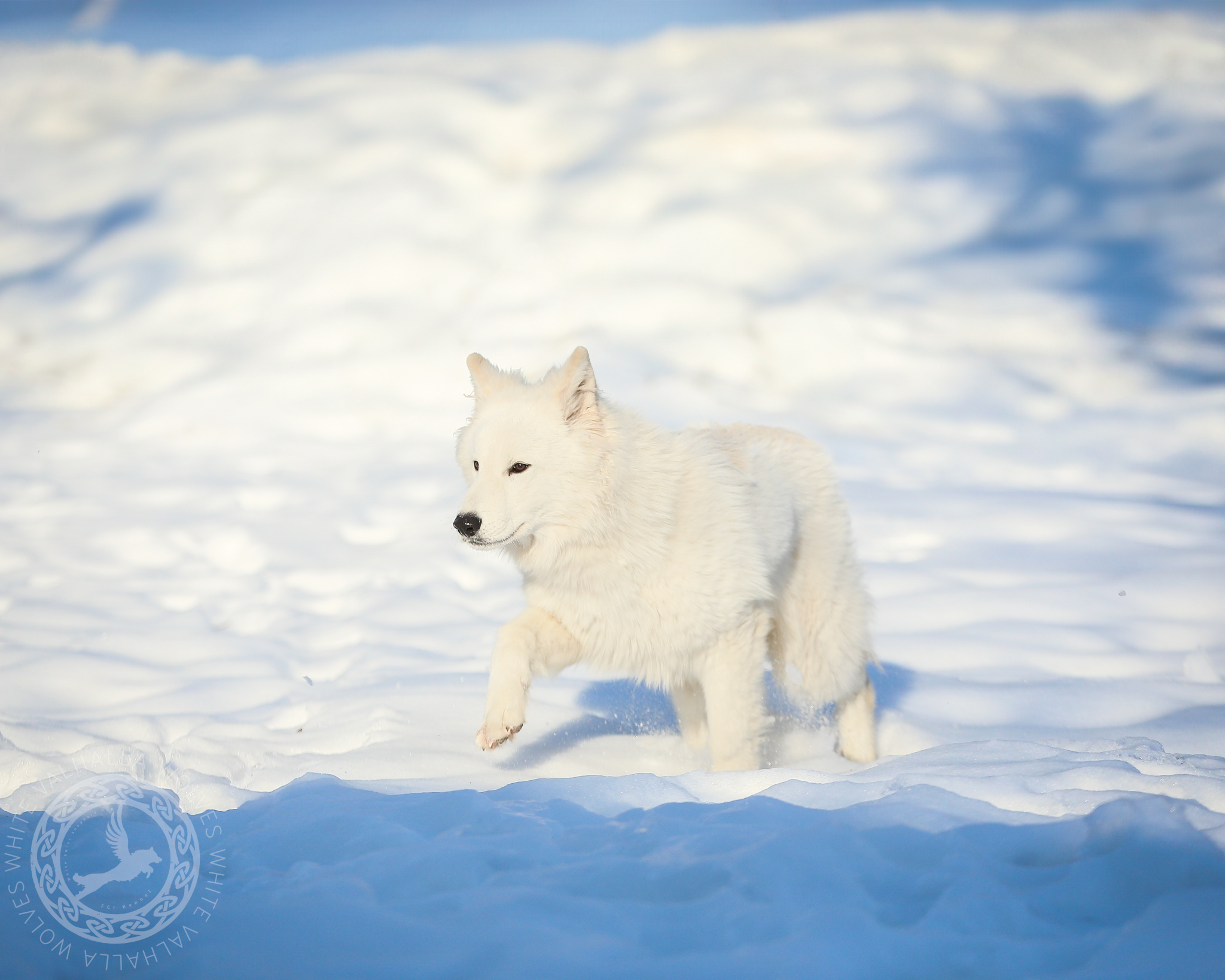
I couldn't wait for winter to create these shots with our white "wolves."
I love Arctic wolves—in such a setting, our shepherds truly resemble them visually.
If I had to choose a favorite season for white Swiss Shepherds, it would probably be winter. Although I'm increasingly looking forward to spring, the charm of snowy shots is undeniable.
To preempt your questions: how do we make our dogs look so white in photos?
The answer is simple—Photoshop.
They're not snow-white. Some of them have very light fur (Torvi, Runa—genetics plays a big part here), but I edit my winter photos according to my own sense of aesthetics. I gently bleach the fur and play with colors and "zippers."
The photo shows our not-so-snow-white Hakon.
15.02.2026 / Everyday matters
One paw speaks louder than a thousand barks
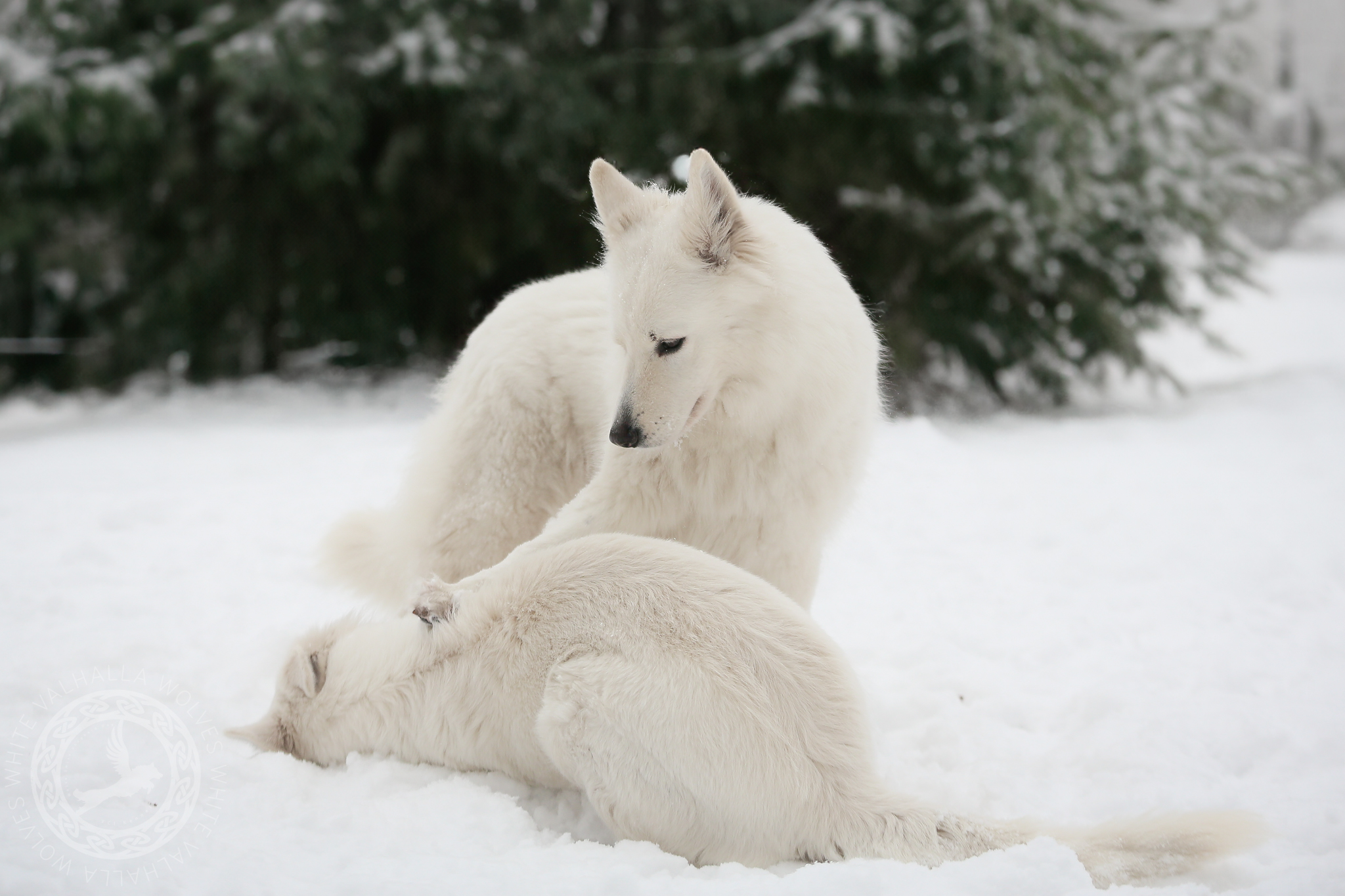
Walkiria and Torvi.
One paw speaks louder than a thousand barks.
Dog communication can be very subtle – but clear. Walkiria rarely needs to resort to explicit reactions – usually a gesture, a look, a freeze, or a raised tail are enough.
Torvi, on the other hand, can display a whole range of submissive gestures in response – lowering her ears, licking Walkiria's muzzle, wriggling at her feet.
Pure language of the species.
I love watching these wordless conversations.
10.02.2026 / Everyday matters
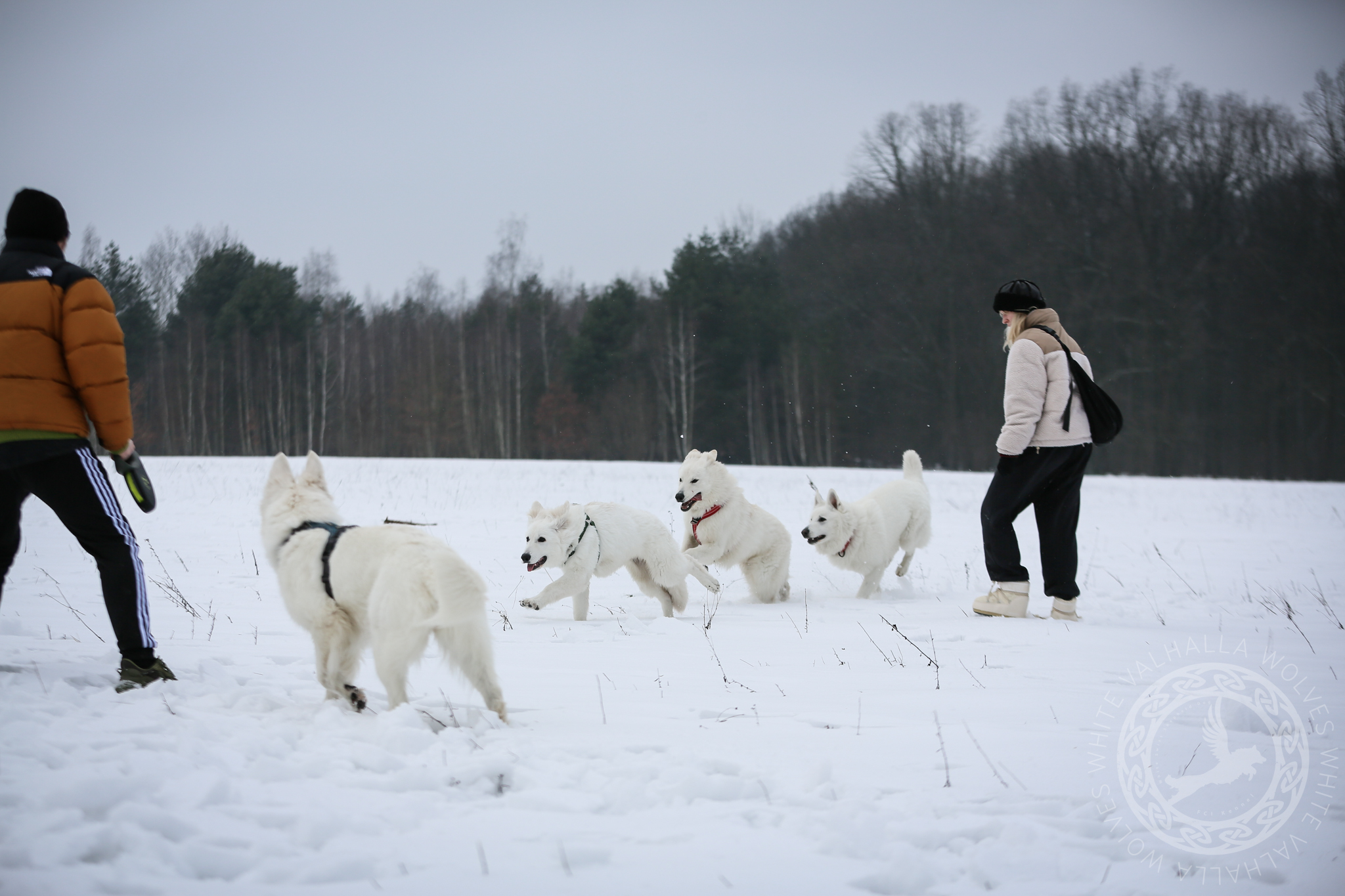
Recent walk together
A few shots from our last walk together :)
This time: Celebrian, Runa, Frodo, Hati, Isten with their families.
We try to organize these meetings every few months. There's time for conversation, sharing experiences, observing the dogs in a group, a bit of socializing, and photos along the way.
For us, it's also a moment to see the results of our breeding work over time, not just at the "sweet puppy" stage. (...)